


CT Productions at 10 – The Anniversary Edition
CT at 10Nigeria
Built to Outlast the Cycle
In conversation with Chief Tunde J. Afolabi, Chairman and CEO of AMNI
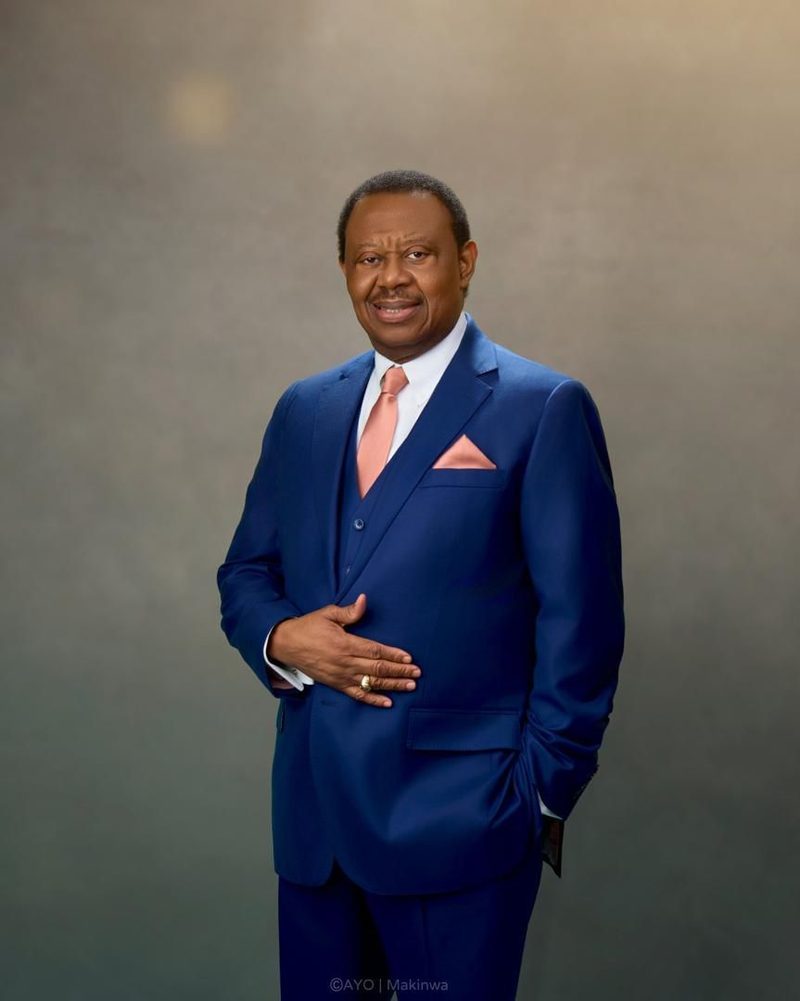
Chief Tunde Afolabi began his career at Texaco in 1974 and became Amni International’s founding Managing Director in 1993. Now Chairman and CEO, he reflects on building an enduring Nigerian energy business, the relationships behind it and his conviction that oil and gas still have a long future. He recalls working 18-hour days in search of drilling prospects, and after half a century in the business, he still sees a future worth exploring.
Roll up your sleeves. There’s plenty of work to do.
Which decisions or relationships have helped AMNI endure the cycles of the oil and gas industry?
I’d single out our relationship with our staff. They are at the forefront of everything we do, both in defence and in driving the business forward. They are the building blocks of the company. Without a good relationship with them, you cannot get anywhere.
Relationships with bankers, suppliers and service providers matter too, but I’d particularly single out our staff. AMNI has perhaps one of the lowest attrition rates in the industry, if not the country, at less than 1%. Employees generally leave for reasons such as relocation or family commitments. Very rarely does anyone resign because they are unhappy or tired of working here.
That comes from continuity, from supporting people and listening to them, and from the relationships you build. If you help them, they help you.
In an industry facing uncertainty and changing expectations, what has experience taught you about leading with conviction while remaining open to change?
This industry hardly changes. I left school in 1974 and I’m now in my 52nd year in the business. The oil, the gas, the market and the consumers remain the same. Technology has improved and the market has grown, but the fundamentals haven’t changed.
When I started, we consumed around 10 million barrels of oil a day, perhaps less. Today, it’s 100 million and growing. Nigeria now uses about 2 billion cubic feet of gas a day, excluding LNG, with NLNG consuming another two billion.
We’re reaching deeper waters and making bigger discoveries, yet the doom-and-gloom predictions say oil will disappear. I haven’t seen anybody wear their windmill yet. What I’m wearing is 99% crude oil. From clothes to tyres, we can’t do without it.
I haven’t seen anybody wear their windmill yet.
Of course, we must preserve the environment. We’re all in this together. The Stone Age didn’t end because there was no need for stones, but because something replaced them. We haven’t found a replacement for crude oil. Other energy sources account for less than 10% of global energy use. The challenge is to keep improving the mousetrap to catch more mice.
What makes partnerships between indigenous energy companies and international investors or partners last?
Everybody wants a good return, whether they’re an explorer or a banker. Unfortunately, borrowing costs more in the Third World, if I can still call Nigeria that. Money I could borrow at 8% in England or the United States costs me 11% here. If investors can earn a good return, they’ll come.
I don’t want to give too much credit to the current administration, but it has done more than virtually any I’ve known in Nigeria to improve the terms of engagement. AMNI alone will be investing close to $2.6 billion in gas within a year. We’re aiming for a combined 750 million standard cubic feet a day by 2029.
We sat on this gas for 50 years. Today’s incentives make the returns more attractive. Nigeria remains a very good investment destination. We have all the right ingredients: the population, the weather, good food and good people.
What do international audiences misunderstand about Nigeria’s oil and gas industry, and what should they know?
You have to be here to see what makes Nigeria tick. The irony is that, geologically, there’s little to distinguish Nigeria’s oil-producing environments from America’s.
As for the people you’ll deal with, 99.9% of us in the industry were educated abroad. We understand the culture of those bringing their money here. If you never leave Houston, London or Paris, you hear rumours about ghosts in Africa and Nigeria and accept them as truth. Arrive at Murtala Muhammed Airport and you see a different picture.
I remember Mobil driving expatriates straight from the airport to their apartment complex with the bus curtains drawn. When they were leaving Nigeria, the curtains would be opened so they could see what they’d been missing. Many didn’t want to leave.
I think some negative stories are spread by people who’ve been here and don’t want competition. In my travels, those holding these misconceptions have usually never been to Nigeria. Come and see for yourself. There’s nothing like your own two eyes.
Come and see for yourself. There’s nothing like your own two eyes.
Looking towards the next decade, what advice would you give the next generation of energy entrepreneurs?
Roll up your sleeves. There’s plenty of work to do. You don’t need to reinvent the wheel, although companies such as SLB and Halliburton must keep finding better ways to drill and produce. For an oil entrepreneur, it comes down to common sense and hard work. I used to work 18 hours a day looking for drilling prospects. You have to replace what you produce.
As the world’s population grows, I can see oil demand reaching 120 or 130 million barrels a day. The next generation must find better ways to increase production and fill that gap.
Despite pressure to reduce fossil fuel use, returns on investment in renewable energy are only around 10%, if that, compared with 90% for fossil fuels. I don’t believe fossil fuels alone can meet a growing population’s needs. If we find other energy sources, all the better. The next generation must balance meeting demand with limiting pollution, but we can’t make omelettes without breaking some eggs.
As we mark ten years and build a legacy of our own, what would you advise us to keep in mind?
I believe in relationships. They matter in every aspect of life, whatever your industry. Look at the political divisions in Israel and America and how long they take to resolve. Problems in relationships can hold back growth at every level: personal, within a group or global.
More FOCUS Interviews
See all interviews
Greece
New Lines of Opportunity
Dimitris Papastergiou, Minister of Digital Governance and Artificial Intelligence of Greece
Flour Mills of Nigeria
The Long View
John G. Coumantaros, Chairman of Flour Mills of Nigeria
JIC Holdings
Unlocking Africa’s Continental Potential
Mark-Anthony Johnson, Founder and CEO of JIC Holdings